We Offer to Help
Our position on short-term rentals – and our proposal for a better solution.
The Starting Point
We Take the Pressure on Housing Seriously
Affordable housing is getting scarce – anyone who lives and works here feels it. We don't dispute that. At the same time, our region depends on tourism, and holiday apartments are part of that fabric. For us, the question is therefore not whether to regulate, but how – in a way that genuinely protects housing without needlessly damaging structures that work.
Taking things seriously also means saying the uncomfortable part out loud: where holiday apartments operate, conflicts with neighbours can arise – noise, badly parked cars, no one to turn to. Such nuisances have shaped public resentment, probably more than any statistic. But a 90-day rule does not solve this particular problem – an apartment can be just as noisy on 90 days a year. What works are clear standards, reachable contact persons, and an association that holds hosts who break the rules to account. That is exactly what we are working on – with our quality label.
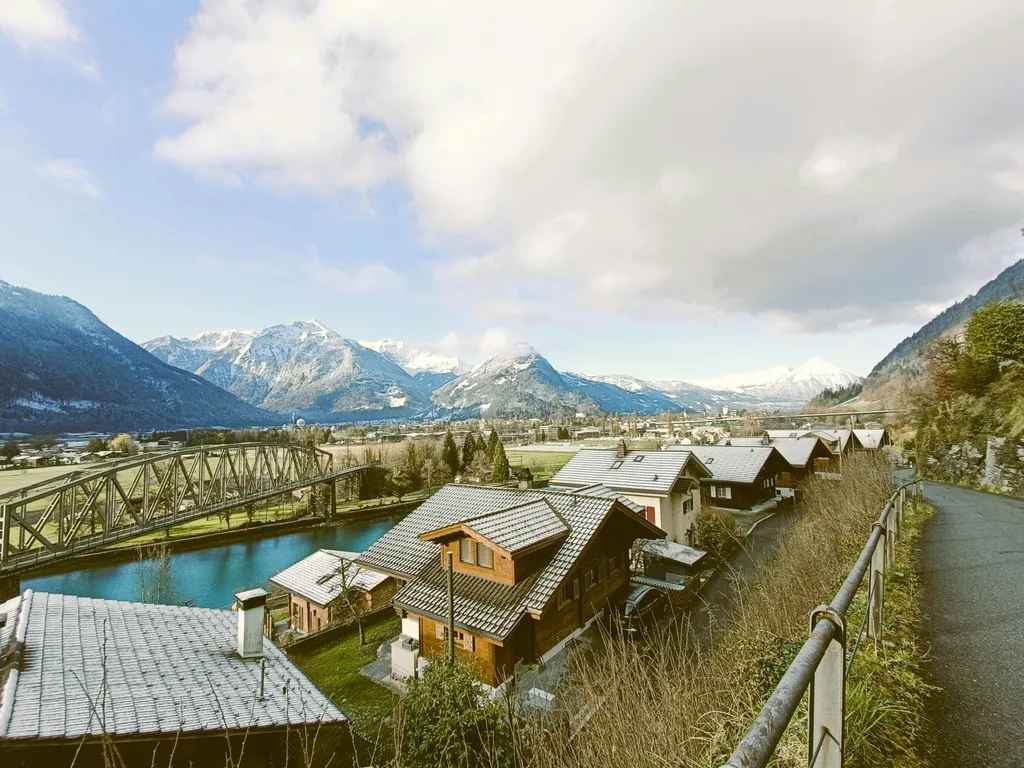
The Wilderswil Model: A Village in Our Region Showed the Way
In 2025, Wilderswil's population adopted its own solution with 83.5% approval: a 70% primary-residence quota in all zones, combined with a minimum stay of 5 nights instead of a rigid day cap. The SP subsequently withdrew its own initiative.
- Protects housing where new building or conversion happens.
- Lets holiday apartment hosts keep operating – with clear rules instead of a de facto ban.
- Was broadly adopted – not only by one political side.
Our proposal: we advocate that the remaining Bödeli municipalities examine a model along these lines.
What Other Cities and Countries Show
New York: A Ban Alone Does Not Lower Rents
In 2023, New York's "Local Law 18" effectively ended commercial short-term rentals – listings dropped by about 92%. Rents kept rising regardless, and vacancy rates did not improve. The city itself counters that thousands of illegal rentals were eliminated.
Even Strict Rules Often Fail on Enforcement
The city of Bern passed a strict rule for its old town in 2022 with 81% approval – it is still not in force today, blocked by a legal challenge. In canton Geneva, an analysis found around 44% of affected hosts violate the existing 90-day rule.
A rule is only as good as its enforcement. That is exactly why we advocate for practical, enforceable solutions rather than rules that sound strict on paper but nobody can enforce.
Facts and Figures
Housing units in Interlaken, Unterseen, Matten, Wilderswil, and Bönigen combined:
| Category | Number | Share |
|---|---|---|
| Housing units total | 12,475 | 100% |
| Primary residences | 10,270 | 82.3% |
| Second homes | 2,205 | 17.7% |
Source: Federal Office for Spatial Development (ARE), housing inventory
- Note that hotels also list some rooms via Airbnb. These are not second homes. Nor is every listing an apartment: some properties are legally or structurally unsuitable for long-term residential use.
- Not every second home is rented short-term: official statistics don't distinguish between privately used and short-term-rented holiday apartments.
How many second homes are actually rented short-term varies a lot from municipality to municipality: according to an analysis by the Swiss Association for Mountain Regions (SAB, based on AirDNA data, as of December 2024), the Airbnb share of the housing stock in Interlaken is 9.7% – in other tourism municipalities in the region, it's sometimes much higher (Grindelwald 9.4%, Lauterbrunnen 23.3%). Differences like these are exactly why municipality-specific solutions make more sense than one uniform rule for everyone.
What Holiday Apartments Contribute to the Region
Around one fifth of all overnight stays in the Interlaken destination are in holiday apartments: in 2024, that was over 711,000 out of more than 3.5 million overnight stays in total (Interlaken Tourism Organisation, via Plattform J). Behind that stand not just hosts, but also cleaning and laundry businesses, tradespeople, restaurants, and local shops.
Occupancy is worth a closer look: a purely privately used second home sits empty most of the year – "cold beds". Professionally hosted holiday apartments, by contrast, are regularly occupied; their guests don't just sleep here, they shop, eat out, and keep local businesses busy – "warm beds". How much the region depends on this is shown by the official impact analysis of the Second Homes Act (ARE/SECO) using Grindelwald as a case study: there, para-hotel accommodation exceeds hotels in overnight stays (311,600 versus 278,200), and the hospitality sector provides 37% of local employment.
Every figure on this page is documented and traceable to its original source. Go to Sources →
Our Contribution: The Quality Label
We want to earn the trust of guests, neighbours, and municipalities. That's why efforts are under way to build a quality label for responsible holiday apartment hosts – our answer to legitimate criticism: not defensiveness, but taking responsibility. Already today, hosts who don't play by the rules are formally reminded by the association – and we are in ongoing dialogue with authorities and organisations to reduce nuisances. Various ideas are currently being examined, for example:
Neighbourhood Standards
Clear rules for consideration towards neighbours.
Local Contact Persons
Designated, reachable contacts for guests and neighbours.
Controls
Verification of standards, not just self-declaration.
The National Development
The federal government is currently preparing (SECO/SEM, as of January 2025) a nationwide, unified registration scheme for short-term rentals – modelled on a new EU regulation. The hotel association HotellerieSuisse likewise calls for a "level playing field" instead of a patchwork of municipal rules. We support this development – a proportionate, nationwide solution is better than five different rules across five neighbouring Bödeli municipalities packed into a very small space.
Frequently Asked Questions
Does the 90-day rule solve the housing shortage?
Experience from other cities shows: not reliably. New York effectively banned short-term rentals – rents kept rising regardless, and vacancy rates did not improve.
Do short-term hosts earn four times a normal rent?
No. Running a holiday apartment involves substantial work: round-the-clock guest care, cleaning, laundry, replacing and renovating furnishings. This work is not free. Rental income is not simply "profit" but a mix of rent, labour compensation, and cost coverage (e.g. for laundry service, restocking supplies, and other overheads).
We Don't Want to Be Blockers.
Wilderswil has shown that a broadly supported path is possible – one that protects housing and keeps our region a vibrant host to visitors. We're ready to walk that path: municipality by municipality, factually and with hands-on experience.